How does a dynamo work?
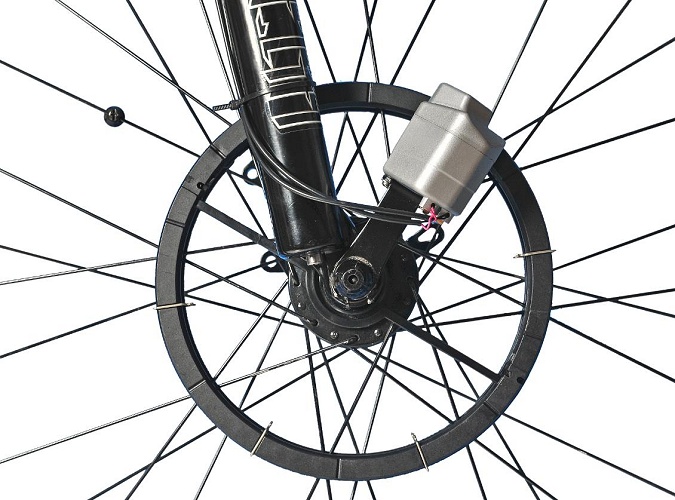
The movement of another body is transmitted to a rectangular coil of
wire that is inside a U-Shaped magnet. The motion of this coil of wire
cuts the magnetic flux in the magnet. Faraday once stated that-Whenever
there is a change in magnetic flux linked with a circuit there is an
induced current and the strength of this induced current is directly
proportional to the rate of magnetic flux-. So according to this rule
when the magnet is in motion it is constantly cutting the magnetic flux,
and as it does this there is a current that is induced (eddy currents).
However a dynamo can either be A.C or D.C according to the brushes and
number of commutators used (Flemings Right-hand rule). If we refer back
to Faraday's rule it says that the strength of this induced current is
directly proportional to the rate of magnetic flux. This rule can be
seen practically in a bicycle that has a dynamo. The faster the rider
rides the faster the change in magnetic flux and hence the brighter the
light
Dynamo is just the opposite/ reverse action of motor operation.
When a conductor is moved across a magnetic field, there induces an emf (voltage) across conductor terminals so as it opposes the change of flux (Lenz rule).
Dynamo is constructed with a cylindrical permanent magnet (which rotates at the center) amidst windings that we take the voltage output from. when the magnet rotates its flux path changes relative to the windings and across the winding there exists an electro-motive-force as a voltage..

No comments:
Post a Comment